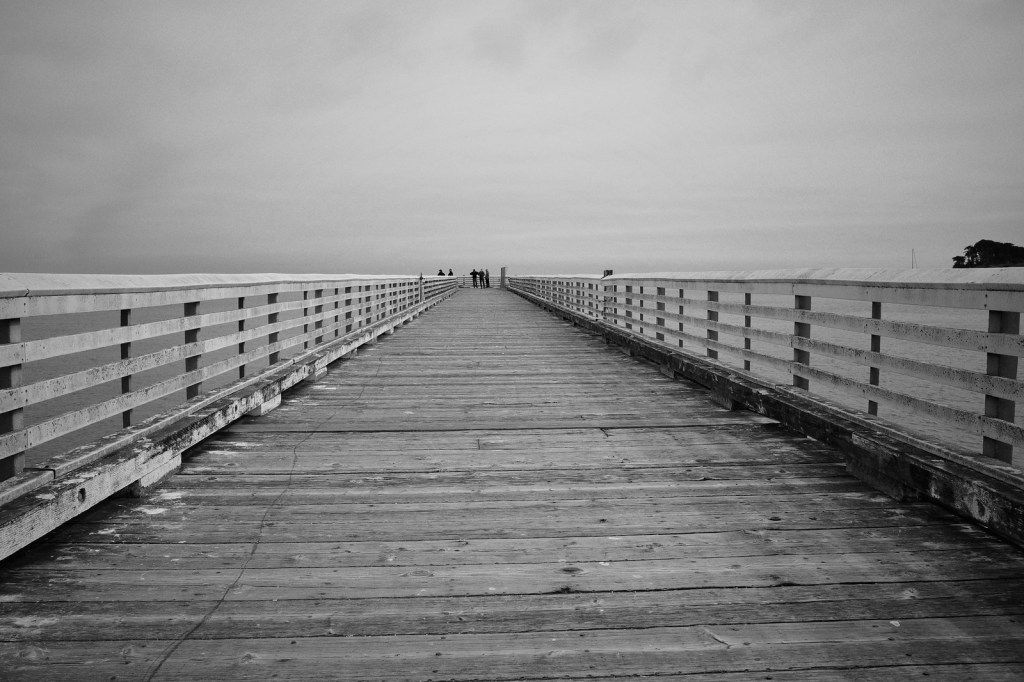
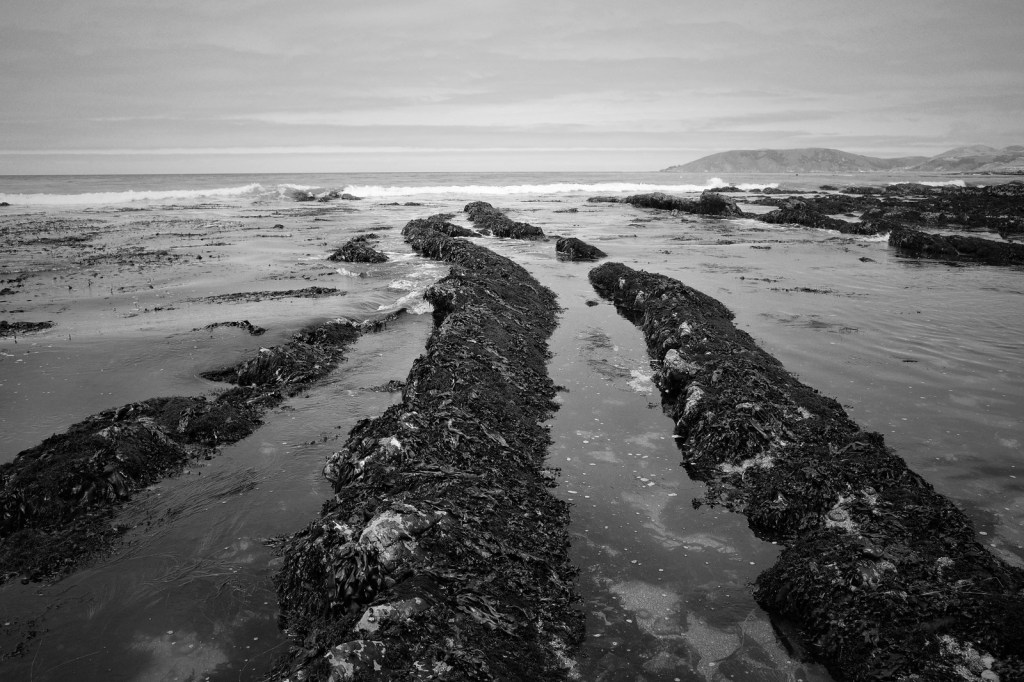
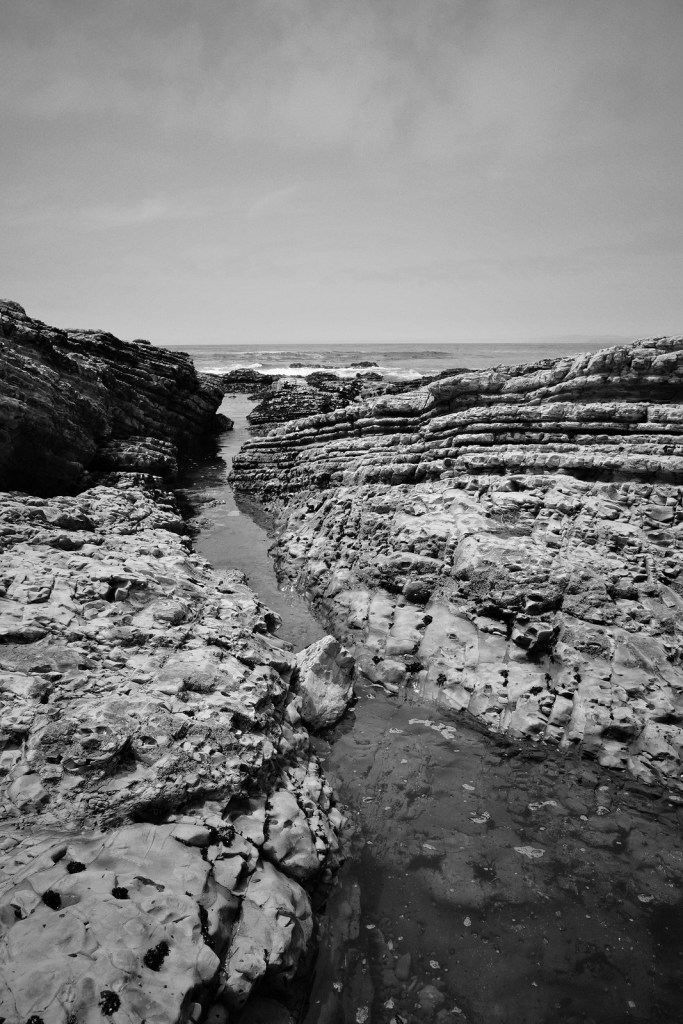
I visited the central coast of California last month, and I used my Ricoh GR III as a monochrome-only model. The only Recipes that I had programmed into the camera were black-and-white, and the only one that I actually shot with was Monochrome Film. This, along with all my other Ricoh Recipes, can be found in the Ricoh Recipes App, available for both Android and Apple—download for free, and consider becoming an App Patron subscriber to unlock the best App Experience and to support this website.
Anyway, I realized while on this trip that I really enjoy using the Ricoh GR III as a monochrome-only model. It was a lot of fun, and I appreciate the results. Pentax, of course, recently released the Pentax K-3 Mark III Monochrome, which is a black-and-white-only DSLR. The obvious question is, will there be a monochrome model of the GR III? I don’t know, but I sure hope that there will be! I think there would be a lot of interest in it, and it would create quite the buzz. I’d be first in line to buy it.
The benefits of a black-and-white-only sensor are an increase in perceived resolution (better fine-detail rendering), more dynamic range, and better high-ISO performance. Why? On a traditional Bayer sensor, only half of the light-sensitive sensor elements are recording luminosity information, while the other half are recording color information—the software guesses what the luminosity information should be for those pixels based on the surrounding ones (and likewise for color information). That means half of your picture is a guess. With a monochrome sensor, the entirety of it is capturing luminosity information, taking the guesswork out of it. That’s oversimplified, but you get the idea.
In the meantime, until Ricoh releases a monochrome version of the GR III (if they ever do), I can still use the regular model to capture great black-and-white photographs, with Recipes like Monochrome Film.


 RITCHIE'S RICOH RECIPES
Will be the second in line for a monochrome model 😊
LikeLiked by 1 person
Awesome!
LikeLike
From your article about the upcoming X100Z …“ IBIS isn’t really needed in the GR III and it’s pretty mediocre anyway, “ . I do not agree at all. It is working phantastic. 1/8 of a second without a tripod, that‘s not mediocre at all, or?
LikeLike
I remember learning many years ago that, with good technique, you can expect sharp images with a shutter speed that is the focal length of the lens as a fraction. For example, I was using a 50mm lens at the time, so I would try to keep the shutter no slower than 1/60, and would use extra care when dropping to 1/30. On my X100V, I try to keep the shutter no slower than 1/30, but I’ve got sharp hand-held as slow as 1/10 using careful breathing and bracing myself (and taking multiple shots to make sure one is good). On the GR III, because of the 18mm lens, I try to avoid slower than 1/20 (because of the 18mm lens), but occasionally I will go slower in a pinch. With an 18mm lens on my X-E4, I have handheld a sharp shot at 1/4 (that’s without any IBIS or lens stabilization!). I feel as though the IBIS on the GR III is more of an encouragement: “You can do it, Winfried!” Your technique is carrying most of the weight, and the camera is only giving you a little extra help.
LikeLike
I have read that the GR is every time rendering the light information by the internal GR software as jpeg. The solution of best resolution and full clean light information is the image modus RAW. It was written in a old GR handbook . Know I’m thinking about my GRIIIx has the possibility to store the light information only by monochrome film simulation without colour translation in B/W?! Probably, the Ricoh engineers can implement this as solution. I think, we have a monochrome gear, but the Ricoh software has to change.
LikeLike